Provincial Patchworks Shaping App Design Choices for Regional Wagering Compliance
Zara Keller · Sep 5, 2026

Provincial Patchworks Shaping App Design Choices for Regional Wagering Compliance
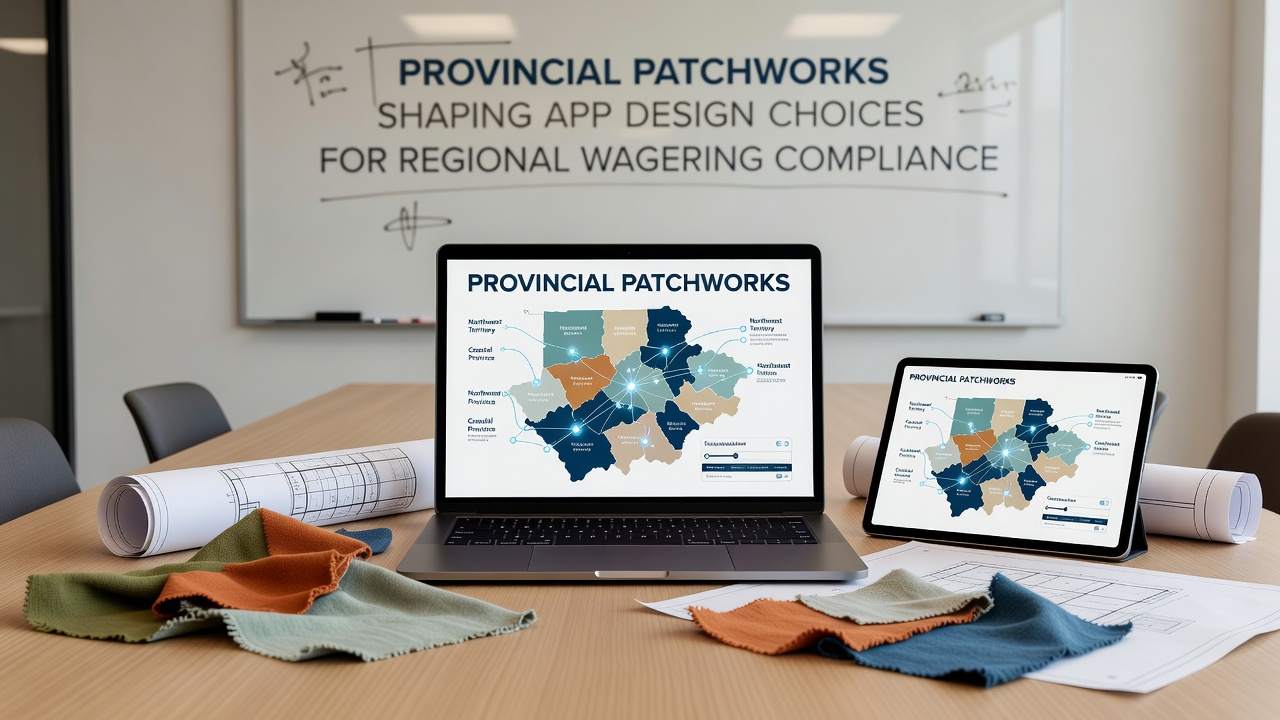
Canada's wagering landscape operates through a collection of provincial rules that differ in scope and enforcement, which forces app developers to build modular systems capable of adapting to each jurisdiction's requirements. Ontario maintains a regulated market through the Alcohol and Gaming Commission of Ontario while Quebec follows rules set by the Régie des alcools, des courses et des jeux, and British Columbia applies standards from its gaming policy enforcement branch. These differences extend to age verification protocols, payment processing restrictions, and mandatory responsible gaming tools that must activate based on user location.
Core Design Adaptations Driven by Location Data
App architects integrate geofencing technology that detects a user's province at login and immediately loads the corresponding compliance module, which means one codebase serves multiple regulatory environments without triggering violations. Developers embed separate databases for each province so that features like deposit limits or self-exclusion lists pull from the correct source while maintaining a consistent user interface across borders. Research from industry reports indicates that companies maintaining separate code branches for Ontario and Quebec experience fewer compliance incidents during audits compared with those using single unified systems.
Payment gateways receive special attention because some provinces restrict certain methods such as credit cards or cryptocurrency, and the app must disable those options automatically when the user enters a restricted region. Engineers achieve this by routing transactions through province-specific processors that already hold the necessary licenses, and the front-end interface hides unavailable options rather than displaying error messages after selection. This approach reduces user friction while satisfying the distinct financial oversight rules that apply in each territory.
Responsible Gaming Features Tailored by Province
Responsible gaming mandates vary significantly, with some provinces requiring daily loss limits while others emphasize time-based reminders or mandatory breaks after extended sessions. App teams therefore program configurable rule engines that activate different sets of controls depending on the detected location, and these engines update through secure server pushes when regulators revise thresholds. Data from regulatory filings shows that provinces with stricter session-time rules report higher adoption rates of voluntary limit-setting tools among app users.
By September 2026, several provinces plan to introduce enhanced verification layers that combine government ID checks with biometric confirmation, which will require apps to incorporate new API connections and additional user flow steps. Teams that already maintain flexible architecture find it easier to integrate these upcoming requirements without rebuilding entire modules. Observers note that early preparation for these changes reduces the risk of service interruptions once the deadlines arrive.
Testing and Certification Across Jurisdictions
Each province maintains its own testing laboratories or approved third-party certifiers, and developers must submit province-specific builds for review before release. The process includes functional checks on geo-location accuracy, payment restrictions, and responsible gaming triggers, which extends timelines compared with single-market releases. Companies that document their modular design decisions in advance often complete certification cycles more efficiently because reviewers can verify each component independently.
Collaboration with regulators in advance of submission helps clarify ambiguous requirements, and some provinces now offer sandbox environments where developers can simulate live conditions before formal testing begins. This practice has become standard among teams handling multi-province rollouts, and it minimizes the number of revisions needed after initial reviews.
Conclusion
Provincial differences continue to shape the technical decisions behind wagering apps, from geofencing logic to payment routing and responsible gaming configurations. Developers respond by constructing adaptable platforms that meet each region's standards while preserving a unified user experience. As new rules approach in September 2026, the emphasis on modular architecture and proactive regulatory engagement is expected to grow. Those who track evolving requirements across jurisdictions position their applications for smoother compliance and sustained market access.